[ Setup article ]

How to Setup DKIM for Constant Contact?

1 min readBy Team EA

Constant Contact account settings menu

DomainKeys Identified Mail (DKIM) is an anti-tamper protocol that ensures that your email remains secure in transit. DKIM uses digital signatures to check that the email was sent by a specific domain. 

Before you can create a DKIM key for Constant Contact, make sure your webmaster is intimated into the process. 

Creating a DKIM Key
  1. Login to your account on Constant Contact here.
  2. Select ‘My Account’ from the upper-right corner of your page.
  3. Go to the ‘My Profile’ section and select ‘Campaign Email Authentication Settings’.
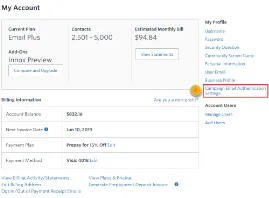
    Constant Contact account settings menu
  4. Select the ‘Self-Authentication using your own domain’ button.
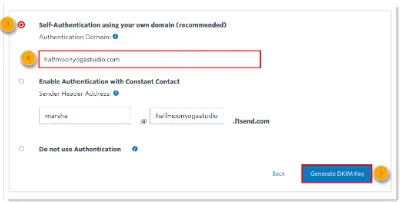
    Constant Contact domain authentication dialog
  5. Type in your domain name.
  6. Click on ‘Generate DKIM Key’.
  7. Copy the generated key and store it.
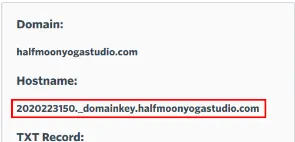
    Constant Contact generated DKIM hostname highlighted
Publishing the Generated DKIM Key

There are two ways to publish the DKIM key. You can either contact your Domain Admin or manually go to your management console and publish the records in the relevant section. 

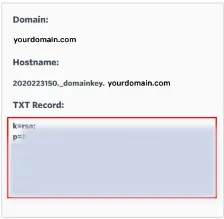
The name of the TXT record will be used as Hostname, and the value of the record will be used as the TXT record content.
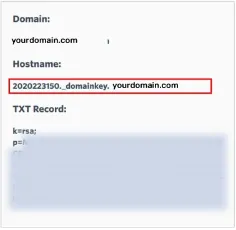
Constant Contact example domain and DKIM TXT record Constant Contact generated DKIM record value

Check your DKIM record using EmailAuth’s free DKIM validator tool.

[ DKIM guide ]

Part of the Knowledge BaseSending-service implementation guides · 365 guides

Enterprise provenance

Why top financial institutions and governments retired their email security dashboards.

Traditional email authentication platforms sell you a dashboard and ask your engineers to do the labour. In high-stakes environments, manual oversight means delayed enforcement, configuration drift and unmonitored shadow domains.

EmailAuth is the agentic email provenance platform. Our agents enforce p=reject, keep third-party senders aligned and move your domains to full RFC 9989 compliance, the new DMARC standard,, with human-in-the-loop auditability.

Governments Large enterprises Tier-1 financial institutions

SaaS · Dedicated tenancy · Air-gapped on-prem · BYOK encryption

[ Keep reading ]

All posts