[ Setup article ]

How to Setup DMARC Records on Bluehost in 3 simple steps

1 min readBy Team EA

DNS configuration screen with a record creation form
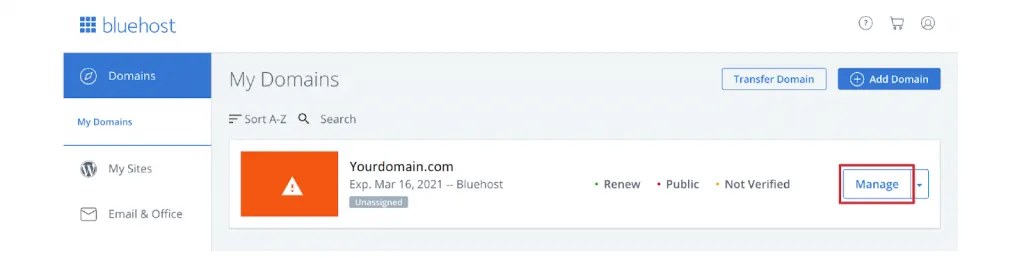
  1.  Log in to your Bluehost account. Navigate to your Dashboard and locate the domain you wish to add the DMARC record to. Click on the ‘Manage’ button.
  2. Go to the ‘DNS’ tab, scroll down to the bottom of the page to the ‘TXT(Text)’ section, and click on the ‘Add Record’ button.
  3. From the ‘Type’ drop-down list, select ‘TXT’
    • In the ‘Host’ field, enter ‘_dmarc’
    • In the subsequent form, enter the following details before clicking the ‘Add Record’ button:
    • In the ‘Value TXT’ field, enter the record sent to you by email or generated using EmailAuth’s DMARC Generator.
DNS configuration screen with a record creation form

You have added the record!

Check the published DMARC record using our DMARC validator. It may take anywhere between 24 to 72 hours for the record to reflect in your DNS.

[ DMARC guide ]

Part of the Knowledge BaseDNS-provider publishing guides · 39 guides

Enterprise provenance

Why top financial institutions and governments retired their email security dashboards.

Traditional email authentication platforms sell you a dashboard and ask your engineers to do the labour. In high-stakes environments, manual oversight means delayed enforcement, configuration drift and unmonitored shadow domains.

EmailAuth is the agentic email provenance platform. Our agents enforce p=reject, keep third-party senders aligned and move your domains to full RFC 9989 compliance, the new DMARC standard,, with human-in-the-loop auditability.

Governments Large enterprises Tier-1 financial institutions

SaaS · Dedicated tenancy · Air-gapped on-prem · BYOK encryption

[ Keep reading ]

All posts